Ryo’s journal · Food & perspective
Make room for the first bite
Let the way you introduce a dish help guests enjoy what makes it special.
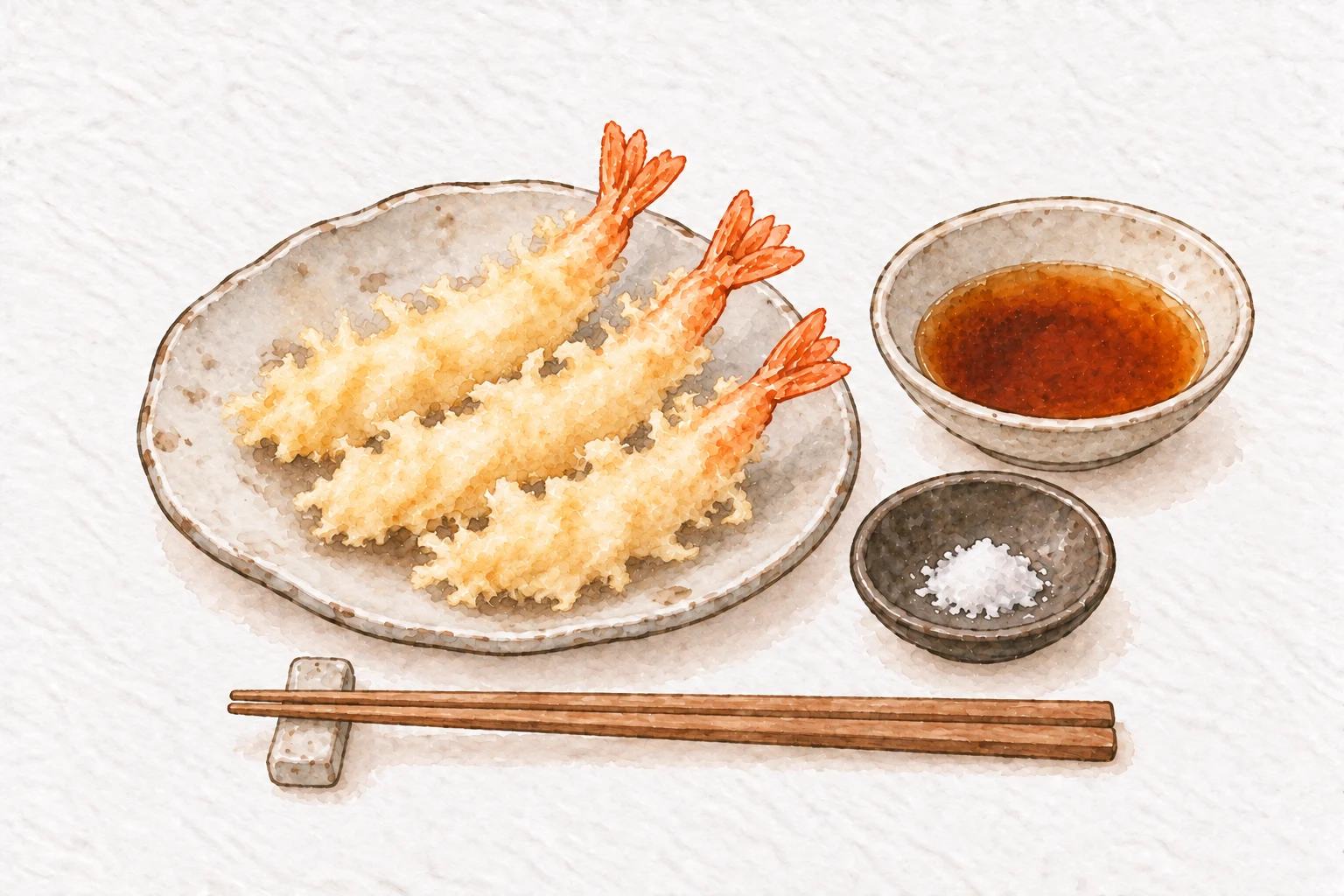
Freshly fried shrimp tempura has a pleasure that belongs to that moment: the light crunch of the batter, the rising aroma, the sweetness of the shrimp as you bite.
I want the care that went into it in the kitchen to reach the guest as fully as possible.
Imagine a plate of shrimp tempura arriving with salt and tentsuyu, a dashi-based dipping sauce. The owner explains where the shrimp comes from, the thought behind the batter and the suggested way to eat it. The guest listens carefully, chopsticks resting on the table.
The explanation comes from affection for the dish. But the more there is to say, the longer it takes to begin eating.
It is this small mismatch that interests me. Could the words meant to introduce a dish be delaying the very pleasure they describe?
A few words can open the first bite
If the first thing to enjoy is the freshly fried batter, the first introduction can be brief.
“Fresh from the kitchen—please be careful, it’s hot. There’s salt and dipping sauce alongside.”
If the guest seems unsure, a little more may help.
“To enjoy the crisp batter, you could try a little salt first.”
Not everyone needs the same explanation, or the same amount of it. Some guests know tempura well; others are trying it for the first time. Some want to hear the story. Others are ready to reach for their chopsticks.
Why you chose the shrimp, or how you make the batter, may be a conversation for after they have begun. Checks about allergies and dietary requirements, of course, need to happen before anyone eats.
I am less interested in removing the story than in finding its place. Food and conversation each have their own timing.
Leave room for a little choice
A touch of salt lets the guest explore the batter and the shrimp. A dip in tentsuyu brings the flavor of dashi into the bite.
The same shrimp tempura offers different pleasures. I would suggest a way to begin, while leaving the guest free to choose what they enjoy.
But offering a choice is not the same as leaving someone uncertain.
For a first-time guest, the small bowl of tentsuyu may not be self-explanatory. What is it? How much should they use?
A sensible arrangement and a short introduction can help. Keep the dipping sauce within easy reach. Make sure the salt is easy to distinguish from a decoration on the plate. Make it comfortable to ask a question.
Knowing Japanese dining habits should not be a condition for feeling at home at the table.
The sound of the batter and the aroma of the shrimp do not need layers of extra staging. First, help the guest feel at ease beginning. Then leave room for the food itself.
Think all the way from the fryer to the table
So far, this is the guest’s side of the story. Delivering that first bite also needs a routine that works for the restaurant.
In some restaurants, the owner cooks, serves and handles the bill. There may be little room for a long explanation at each table or a complicated tableside finish.
Before adding a new gesture to this shrimp tempura, I would look at its journey from the fryer.
Is the plate ready when the tempura is? Does the food wait while someone prepares the salt and dipping sauce? Can the finished plate be carried comfortably, as it is?
These are small questions. Yet having less to search for after the cooking is finished could give the person serving a little more breathing room.
Begin with one dish and the plates you already use. Walk through it on your own or with someone you work with playing the guest.
If you try a change during service, start gradually, at a quieter moment.
Did guests know how to begin? Did the explanation hold up another task? Were the used dishes easy to clear, wash and put back?
Serving both salt and tentsuyu is not a requirement for every restaurant. Consider the way you want guests to enjoy the dish, the number of vessels, preparation and washing-up.
Thoughtful hospitality should not depend on one owner constantly stretching themselves further. It needs to be something the restaurant can keep doing.
Connect the dish, the words and the photograph
The menu and website are part of the experience before this plate arrives.
If the dish is shrimp tempura served with salt and tentsuyu, give it a name and description that make that clear. Let the photograph show the batter, the arrangement and what comes alongside.
A beautiful photograph can create anticipation. If the plate that arrives is different, that anticipation may lead somewhere the restaurant never intended. When the words and picture reflect what you care about, guests can arrive looking forward to it.
At the table, the food then has a chance to meet that expectation.
I want to think beyond presentation alone, or the words spoken during service. The character of a dish should carry through from reading the menu to taking the first bite.
A UMACA collaboration can begin with one existing dish. We can talk about what you want guests to enjoy, then work on the plating, a brief introduction and the menu or website wording within an agreed scope. You try it in your restaurant; together, we adjust what does not fit the way you work.
The aim is something useful in everyday service, not a long speech to memorize.
We do not need to invent a whole new menu. There may already be more to share in a dish your kitchen cares about.
Which dish in your restaurant do you most want guests to enjoy at its best? Tell me about that first bite.